Start from experience, not a stereotype
Think about the habits you actually recognise in yourself instead of choosing the description that sounds most flattering or familiar.

Use the questions to explore how you usually respond to people, pressure, decisions, and change. You do not need a fixed idea of who you are before you start.
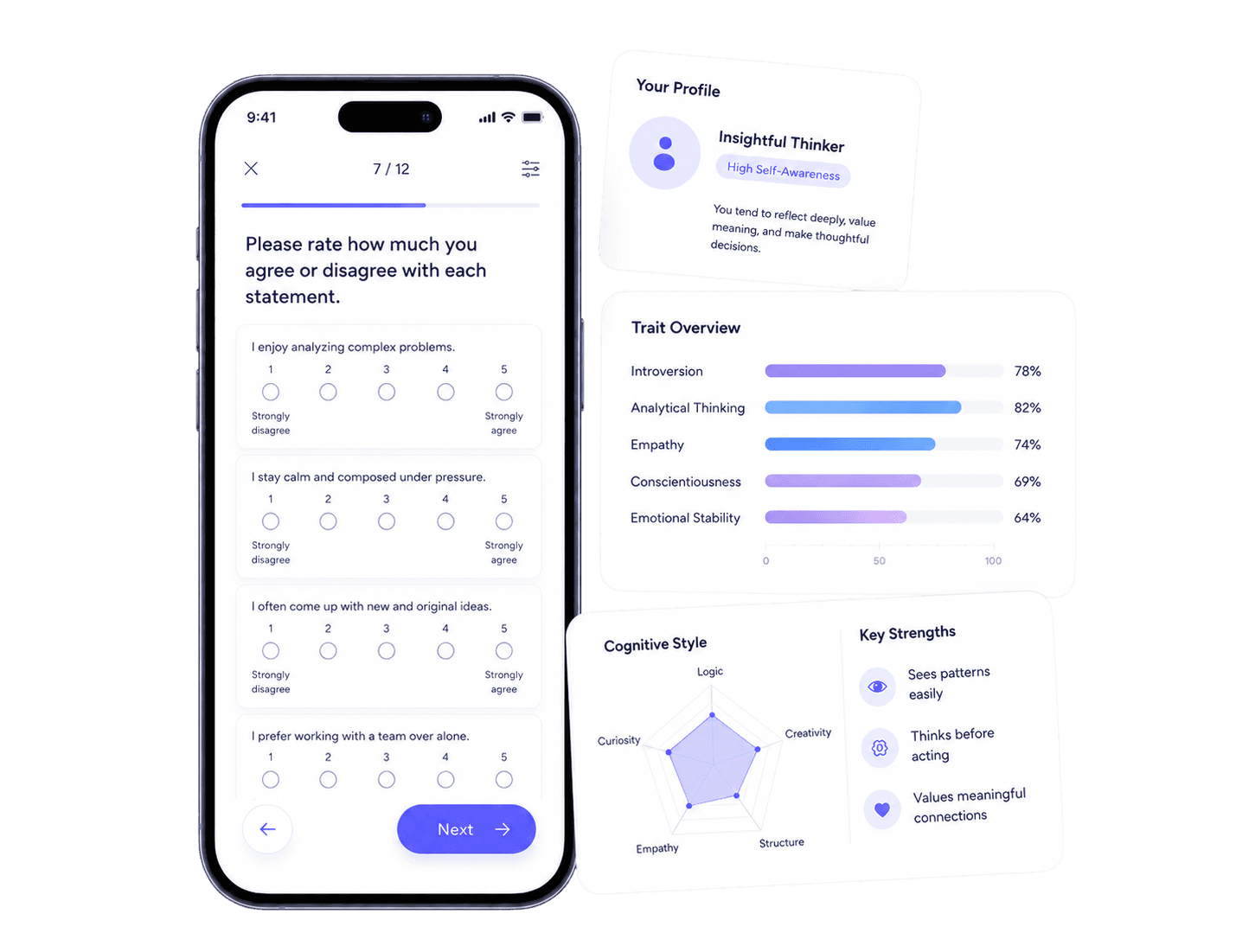
Think about the habits you actually recognise in yourself instead of choosing the description that sounds most flattering or familiar.
Reflect on what shifts when you feel safe, rushed, disappointed, included, responsible, or unsure of what another person expects.
Consider how the same personal style may appear at home, in groups, at work, and when you have an important decision to make.
Use the report as a source of better questions, not a set of rules about who you should be or what you can do.
Base your answers on patterns from the last few months rather than one unusually good, stressful, or emotional day.
Your first honest reaction is often more useful than trying to work out which response will lead to the best result.
Compare the report with your real experience and decide which observations give you a clearer view of your own patterns.
No. The test is designed to guide the experience without requiring prior knowledge of personality systems or psychological terminology.
That is common. Your report is based on the wider pattern in your answers rather than one isolated quality or one specific situation.
Your responses can be shaped by experience, environment, relationships, stress, and personal growth. The result reflects the patterns you recognise now.
No. It can offer reflection points about your preferences and working style, but it does not make career decisions for you.
No. This is an educational personal-reflection tool. It does not diagnose any medical, psychological, psychiatric, or professional condition.
Personality systems can be helpful when they give you language for a pattern you have been living with for years. They become less helpful when they ask you to fit every part of yourself into a single description. Real people change across settings, roles, relationships, and stages of life.
Trying a personality test can still be valuable because it asks you to slow down and compare your reactions. What do you do when a plan changes? How do you approach a difficult conversation? Do you decide quickly, wait for more information, seek support, take charge, or step back?
Those questions can reveal more than a label. They help you notice where you have a default response and where you may have more choice than you realised.