Recognition versus dependence on recognition
Enjoying praise is different from needing visible approval to feel secure, successful or properly valued.

Being noticed, praised, criticised, compared or asked to make room for someone else's needs can reveal more than a label ever will. Look at the meaning you give those moments and the response that follows.
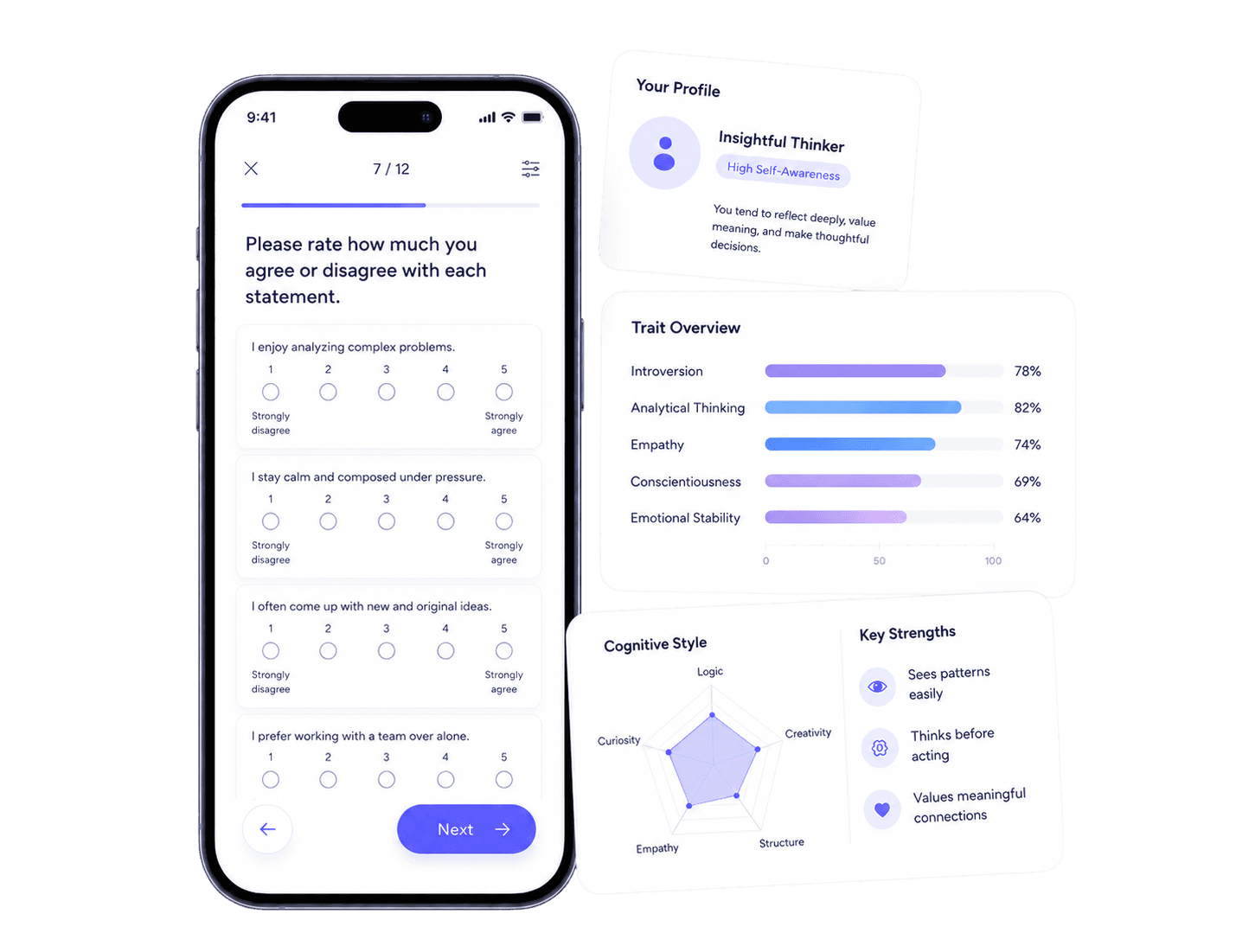
Enjoying praise is different from needing visible approval to feel secure, successful or properly valued.
Knowing what you want is different from assuming your needs, status or preferences should automatically receive special priority.
Notice whether feedback stays specific to one behaviour or quickly becomes a challenge to your competence, worth or rightness.
Ask whether attention to your own goals and feelings still leaves enough room to understand, listen to and respond to another person's experience.
Think about praise, criticism, competition, mistakes, disagreement, attention and closeness — the moments where your self-image is actually tested.
Notice the difference between being overlooked and concluding that you were disrespected, or receiving feedback and experiencing it as a personal attack.
Look for defensiveness, comparison, control, approval seeking, withdrawal, self-promotion or difficulty making room for another viewpoint.
No. It is an educational self-reflection assessment. Narcissistic personality disorder is a clinical diagnosis that requires professional evaluation of a much broader and persistent pattern.
It explores self-reported tendencies involving recognition, admiration, entitlement, comparison, criticism, self-focus, empathy, listening, achievement and control.
No online score can establish that identity or diagnosis. The result is better used to identify which narcissism-related tendencies you reported more strongly and where they may affect everyday behaviour.
No. The assessment is designed for your own self-report. Your interpretation of someone else's behaviour cannot substitute for their answers or a professional assessment.
No. Those are research distinctions, but this assessment returns one overall narcissistic-traits range rather than a named subtype result.
Imagine someone else receives the credit you expected. The event itself is simple; the interpretation may not be. You could see it as disappointing, unfair, humiliating, proof that people do not recognise your value, or motivation to work harder. Those meanings can produce very different behaviour.
The same is true of criticism. A specific comment about your work can remain information, or it can become a threat to the larger story you tell yourself about being competent, exceptional or in control. Once that shift happens, listening becomes harder and defending the self-image can become more important than understanding the feedback.
Thinkhint is most useful when it helps you separate those layers: what happened, what you assumed it meant, how strongly your self-image reacted and what you chose to do next. That is more precise than accepting or rejecting a loaded label.