Self-worth
Whether you feel you matter as a person, and whether that depends on how well things are going.

This 100-question self-esteem test looks at how you value yourself, how you deal with your flaws, how capable you feel, and how easily you stand up for yourself.
Whether you feel you matter as a person, and whether that depends on how well things are going.
How you treat yourself after a mistake, and how comfortable you are with the parts of you that aren't perfect.
How much you trust yourself to handle problems, make decisions and follow through.
How easily you say no, speak up for what you need, and recover from criticism or rejection.
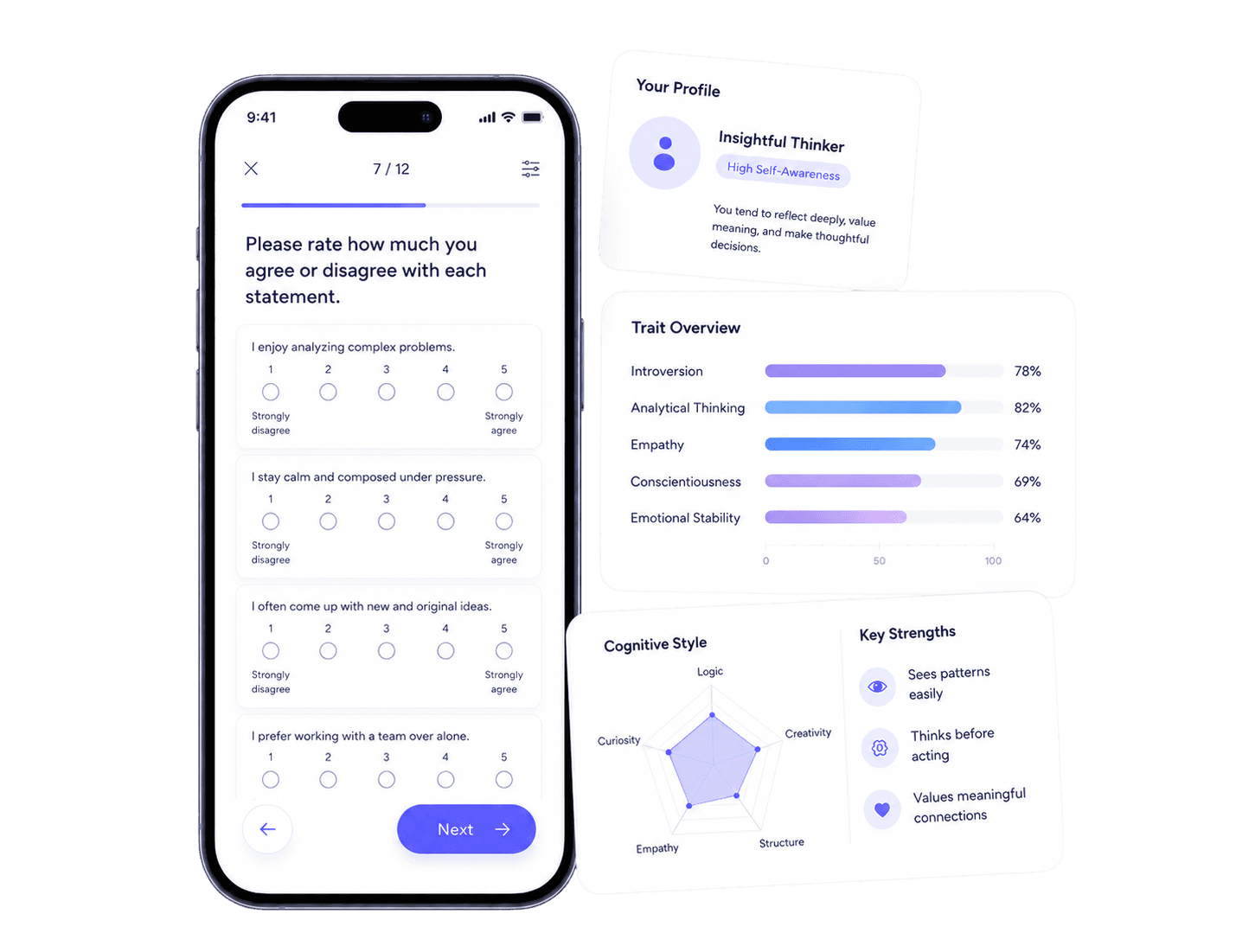
Rate how much each statement matches how you usually think and feel about yourself.
Your answers are scored across five areas and placed on one of five levels, from very low to very strong.
See what supports your self-esteem, what tends to undermine it, and where small changes could help.
Most people finish the 100 questions in 10 to 20 minutes. Answer honestly, even when the true answer isn't the one you'd prefer.
Your result is one of five levels: very low, low, balanced, strong or very strong self-esteem, with a breakdown of the five areas.
Not necessarily. Healthy self-esteem means seeing yourself realistically, which includes being able to admit mistakes.
Yes. It shifts with experiences, relationships and the way you talk to yourself, so your result reflects how things are now.
No. Thinkhint is a self-reflection test. If low self-worth is affecting your daily life, consider talking to a mental health professional.
Self-esteem shows up in small, everyday choices: whether you apply for the job, speak up in a meeting, or apologize for things that aren't your fault. It is easy to notice the results without seeing the pattern behind them.
The test separates self-esteem into five parts: self-worth, self-acceptance, confidence in your abilities, boundaries, and how you handle rejection. Many people are solid in one area and much harder on themselves in another.
Your result is a private snapshot based on your answers. It is meant to help you understand yourself better, not to label you.