When contact becomes uncertain
Notice whether you stay steady, start reading into the silence, seek reassurance, or protect yourself by caring less outwardly than you actually do.

What do you do when someone takes longer to reply, wants more closeness, needs space, disappoints you, or asks you to depend on them? Those ordinary reactions can be more revealing than choosing an attachment label for yourself.
Notice whether you stay steady, start reading into the silence, seek reassurance, or protect yourself by caring less outwardly than you actually do.
Closeness can feel comforting, exciting, demanding, exposing, or all of those at different times. The contrast matters more than a stereotype about being 'clingy' or 'distant.'
Think about asking for support, admitting hurt, setting a boundary, or relying on someone. Your default move may reveal more than what you say you value in relationships.
Compare whether you talk, pursue, withdraw, minimize, become highly alert, or need time before you can reconnect after a difficult exchange.
Use real memories rather than abstract ideals. If a statement changes depending on the person or setting, notice that instead of forcing a universal answer.
You may recognize secure, anxious, distancing, or conflicted reactions in different situations. The questionnaire is more useful when you do not edit away the exceptions.
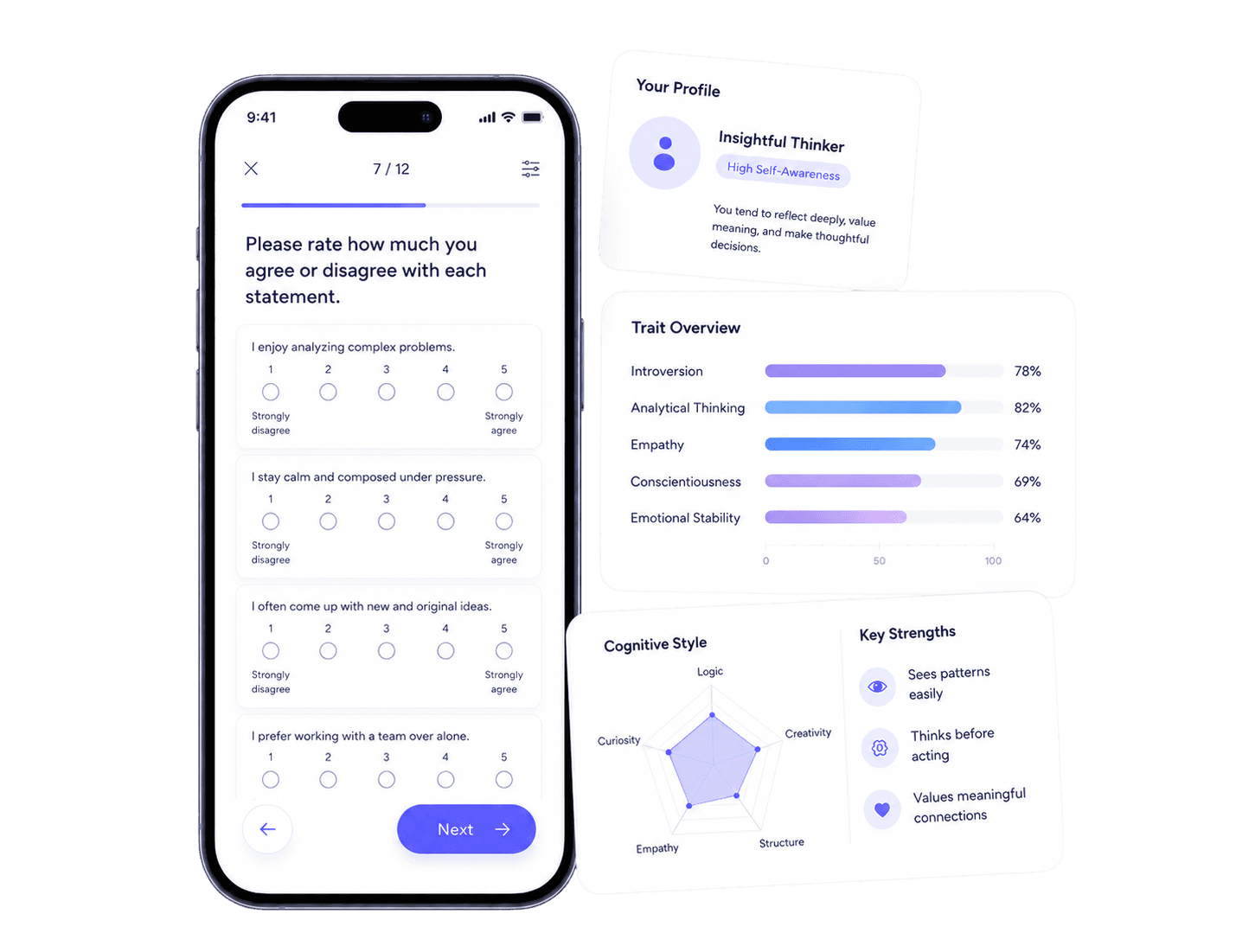
Your answers produce one leading attachment profile and a detailed report. Compare that profile with the situations you had in mind while answering.
Attachment labels are easy to recognize in social-media shorthand. Real relationships are messier. You may want reassurance without pursuing it, value independence without avoiding intimacy, or feel secure until a particular kind of uncertainty appears.
ThinkHint's result gives you a leading profile, but the stronger insight comes from the examples behind your answers. Keep those examples visible when you read the report so the label remains tied to behaviour rather than becoming a personality slogan.
No. Attachment styles describe relationship tendencies. ThinkHint is an educational self-report tool and does not diagnose a mental health condition.
No. You can draw from current or past romantic relationships, close friendships, family relationships, dating experiences, or other bonds where trust and closeness mattered.
That is common and worth noticing. Reactions can shift by context, stress, trust, and relationship history. The quiz still returns one leading profile based on the full set of responses.
ThinkHint uses five plain-language profiles in its own questionnaire and report. They overlap familiar attachment themes but should not be treated as a validated four-category clinical instrument.
Yes. Attachment-related tendencies can shift with experience, safer relationships, life circumstances, self-awareness, and therapy.
Once you have read about attachment styles, it is easy to develop a theory about yourself. You may decide you are anxious because you worry about replies, avoidant because you need space, or secure because you communicate well in one relationship.
Situations complicate that theory in a useful way. How do you behave when support is available? What happens when closeness increases? Can you ask directly for reassurance, or do you test the relationship indirectly? Do you need space to regulate, or use space to avoid the conversation entirely?
Those distinctions make the final result more informative. The quiz is not valuable because it gives you a catchy name; it is valuable when the name helps you organize reactions you can actually observe and compare.