Falling and staying asleep
How long it takes you to drop off, and how often you wake up during the night or too early.

This 100-question sleep quality test looks at how easily you fall and stay asleep, how rested you feel, how regular your schedule is, and how your nights affect your days.
How long it takes you to drop off, and how often you wake up during the night or too early.
Whether you wake up refreshed, or feel tired no matter how many hours you spent in bed.
How regular your bedtime and wake-up time are, including the difference between weekdays and weekends.
Sleepiness, focus and mood during the day, plus screens, caffeine and your bedroom setup.
Rate how much each statement matches your sleep over a typical week.
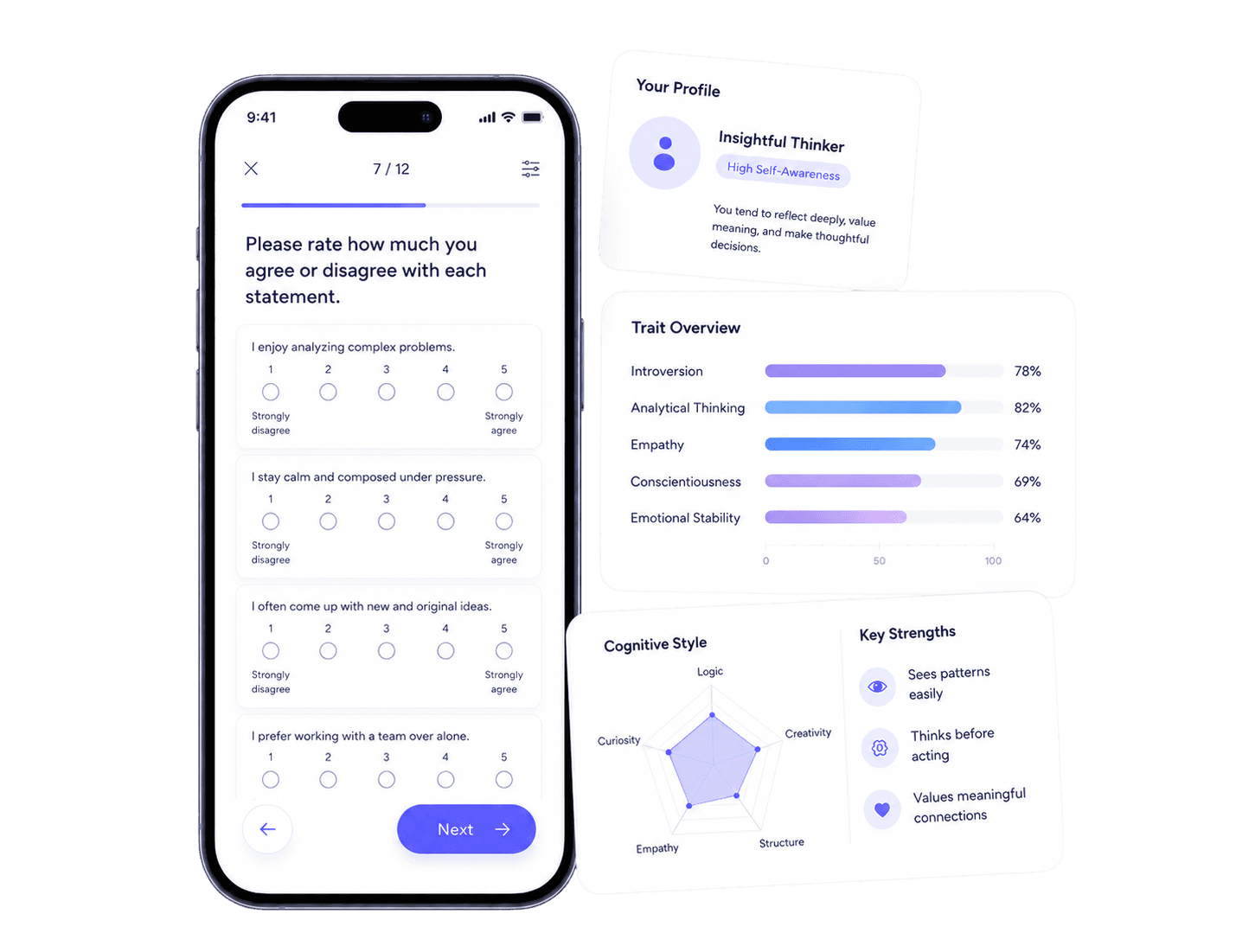
Your answers are scored across five areas and placed on one of five levels, from restorative sleep to severely disrupted sleep.
See which parts of your sleep need the most attention and which habits are most worth changing.
Most people finish the 100 questions in 10 to 20 minutes. Think about a normal week rather than your worst night.
Your result is one of five levels: restorative sleep, mild disruption, moderate disruption, poor sleep quality or severely disrupted sleep.
No. You can spend eight hours in bed and still wake up tired if your sleep is broken or irregular. The test looks at both.
No. It is a self-reflection test, not a medical assessment. It can't diagnose insomnia, sleep apnea or any other condition.
If poor sleep lasts for weeks, you feel very sleepy during the day, or someone notices you snore loudly or stop breathing in your sleep, talk to a doctor.
Sleep problems are easy to get used to. A late bedtime becomes normal, waking up at 4 a.m. becomes something you just live with, and feeling tired all afternoon starts to seem like part of the job.
The test looks at the whole picture: falling asleep, staying asleep, how rested you feel, how regular your schedule is, and what your habits and bedroom are like. Poor sleep often has more than one cause, and seeing them together helps you decide what to change first.
Your result is based on your own answers and is not a medical assessment. If your sleep is seriously affecting your health or daily life, speak to a doctor.