Pressure
How much you feel is expected of you, and how often you feel there isn't enough time to get it done.

This 100-question stress level test looks at the pressure you feel, how busy your mind is, the tension it causes in your body and mood, and how well you manage to switch off.
How much you feel is expected of you, and how often you feel there isn't enough time to get it done.
Racing thoughts, trouble concentrating, and finding it hard to stop thinking about what's left to do.
Irritability, worry, tight muscles, headaches, a fast heartbeat and other physical signs of stress.
Whether you can relax once the pressure is off, and how much control you feel over your situation.
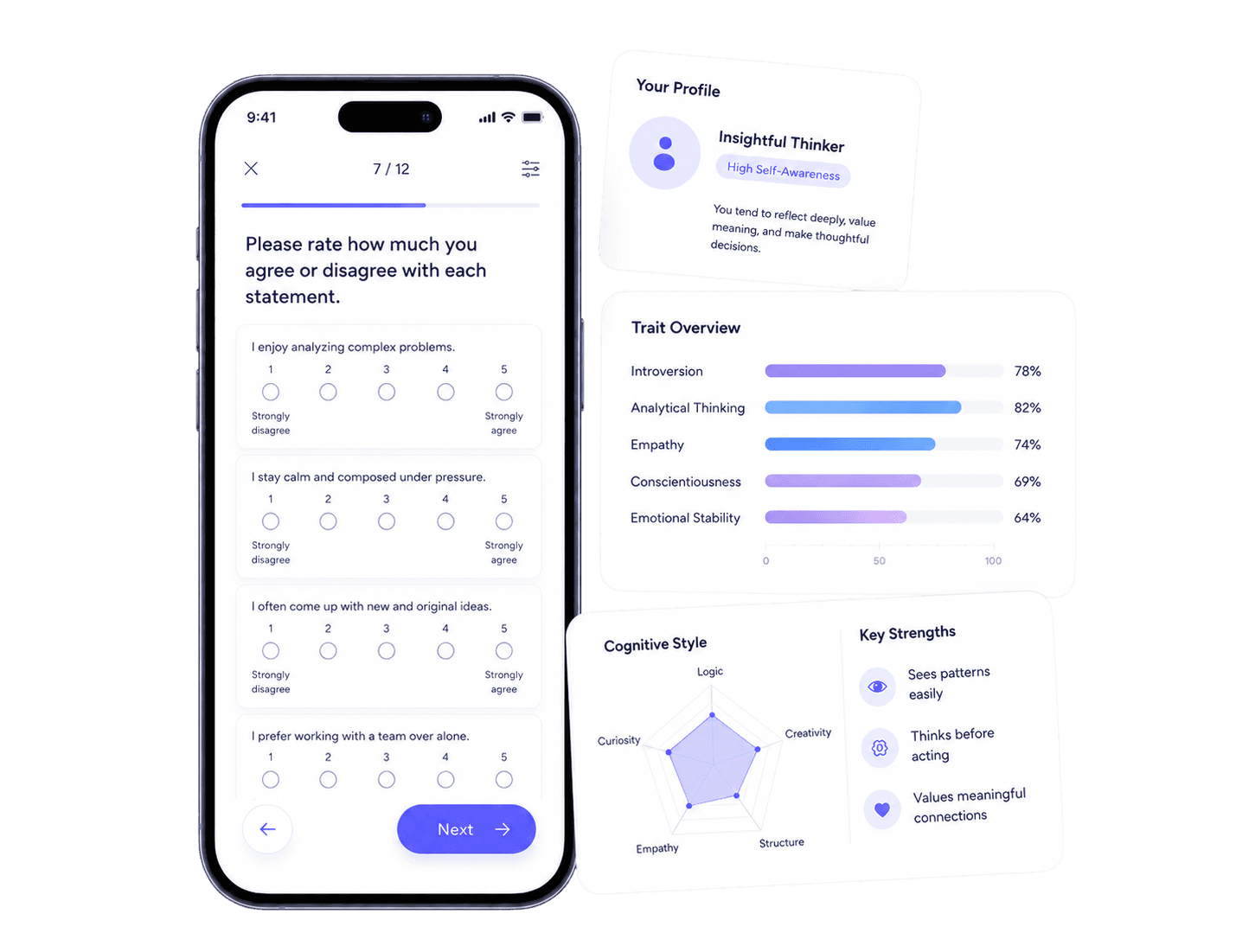
Rate how much each statement matches how you have felt over the past few weeks.
Your answers are scored across five areas and placed on one of five levels, from minimal to severe stress.
See where your stress comes from, how it shows up for you, and which areas of recovery need attention.
Most people finish the 100 questions in 10 to 20 minutes. Think about the past few weeks rather than just today.
Your result is one of five levels: minimal, mild, moderate, high or severe stress, with a breakdown of the five areas.
Yes. Short bursts of stress are a normal response to challenges. The test is more concerned with stress that is constant and leaves little room to recover.
No. Thinkhint is a self-reflection test. It can't diagnose anxiety or any other condition.
If stress is affecting your sleep, health or relationships, or you feel you can't cope, talk to a doctor or a mental health professional.
When you're busy, stress can feel like the normal background of life. You notice the deadlines and the full inbox, but it is easy to miss the headaches, the short temper or the evenings when you can't switch off.
The test looks at five areas: how much pressure you're under, how overloaded your mind is, the emotional and physical tension that comes with it, and how well you recover. Two people under the same pressure can react very differently, and that difference is what the result shows.
Your result is a private summary based on your answers. It is not a diagnosis, but it can help you see what is driving your stress and where to start easing it.