Emotional escalation
Notice how quickly feelings rise, what tends to intensify them, and whether the reaction is difficult to settle once it starts.

This BPD Test helps you compare recurring experiences involving emotional intensity, rejection, identity, impulsive reactions, and close relationships. The goal is a clearer personal record, not a clinical verdict.
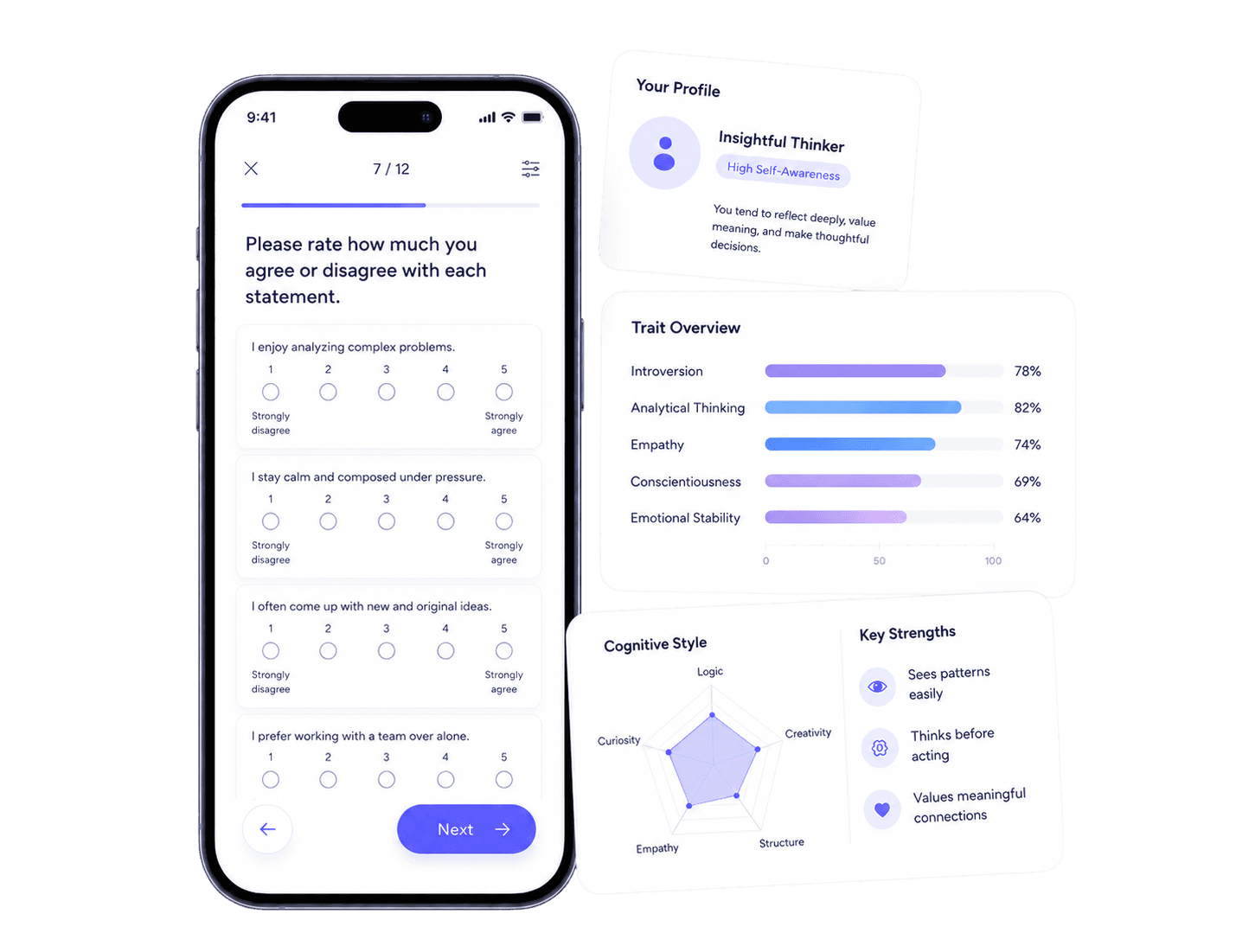
Notice how quickly feelings rise, what tends to intensify them, and whether the reaction is difficult to settle once it starts.
Reflect on perceived rejection, fear of losing connection, push-pull dynamics, reassurance-seeking, and the way conflict changes closeness.
Consider whether stress changes how you see yourself, what you want, or the decisions and actions you make in the moment.
Use the report to move from “something feels wrong” toward concrete examples you can reflect on, monitor, or discuss with a professional if needed.
Think beyond one argument, breakup, crisis, or unusually calm period. The more useful answer reflects what has repeated in different parts of your life.
Your answers are combined into one result from Minimal Traits to Strong Traits. Thinkhint does not report separate diagnostic subscores for abandonment, identity, impulsivity, or emotional regulation.
The report discusses emotional regulation, identity, relationships, behavior, communication, daily functioning, and decision-making so you can compare the result with real examples.
It is a self-report test about experiences associated with BPD-related traits, including emotional reactivity, rejection sensitivity, identity uncertainty, relationship instability, impulsive behavior, anger, emptiness, and stress-related disconnection.
No. Diagnosis requires a qualified mental health professional to assess persistent patterns, their impact, personal history, and other possible explanations.
No. Thinkhint uses its own questionnaire and scoring model. The result should not be interpreted as an MSI-BPD score or another validated clinical screening result.
You receive one overall level—Minimal, Mild, Moderate, Elevated, or Strong Traits—followed by a detailed narrative report. The report themes are not separate subscores.
Stop the test and seek appropriate support. If you may harm yourself or someone else, contact urgent local emergency or crisis services rather than relying on an online self-test.
A single intense reaction does not tell you whether a personality disorder is present. People can feel rejected, act impulsively, become angry, question themselves, or struggle in a relationship for many reasons. What becomes more informative is the pattern across time: what tends to trigger the reaction, which other experiences arrive with it, and how much it affects daily life.
Borderline personality disorder is clinically associated with persistent difficulties involving emotional regulation, self-image, impulsivity, and relationships. Those areas can overlap with other mental health experiences, which is one reason diagnosis requires more than an online score.
Use this result as a structured record of your own answers. If it helps you describe a recurring problem more precisely, it has done something useful without needing to become a label.