
Thinkhint

Put a difficult stretch into context with a depression test

Thinkhint helps you compare recent changes in mood, interest, energy, sleep, self-view and everyday functioning. The goal is not to force a label; it is to see what has changed, how often it appears and how much it is affecting daily life.

Answer at your own pace
Recent everyday experience
Private
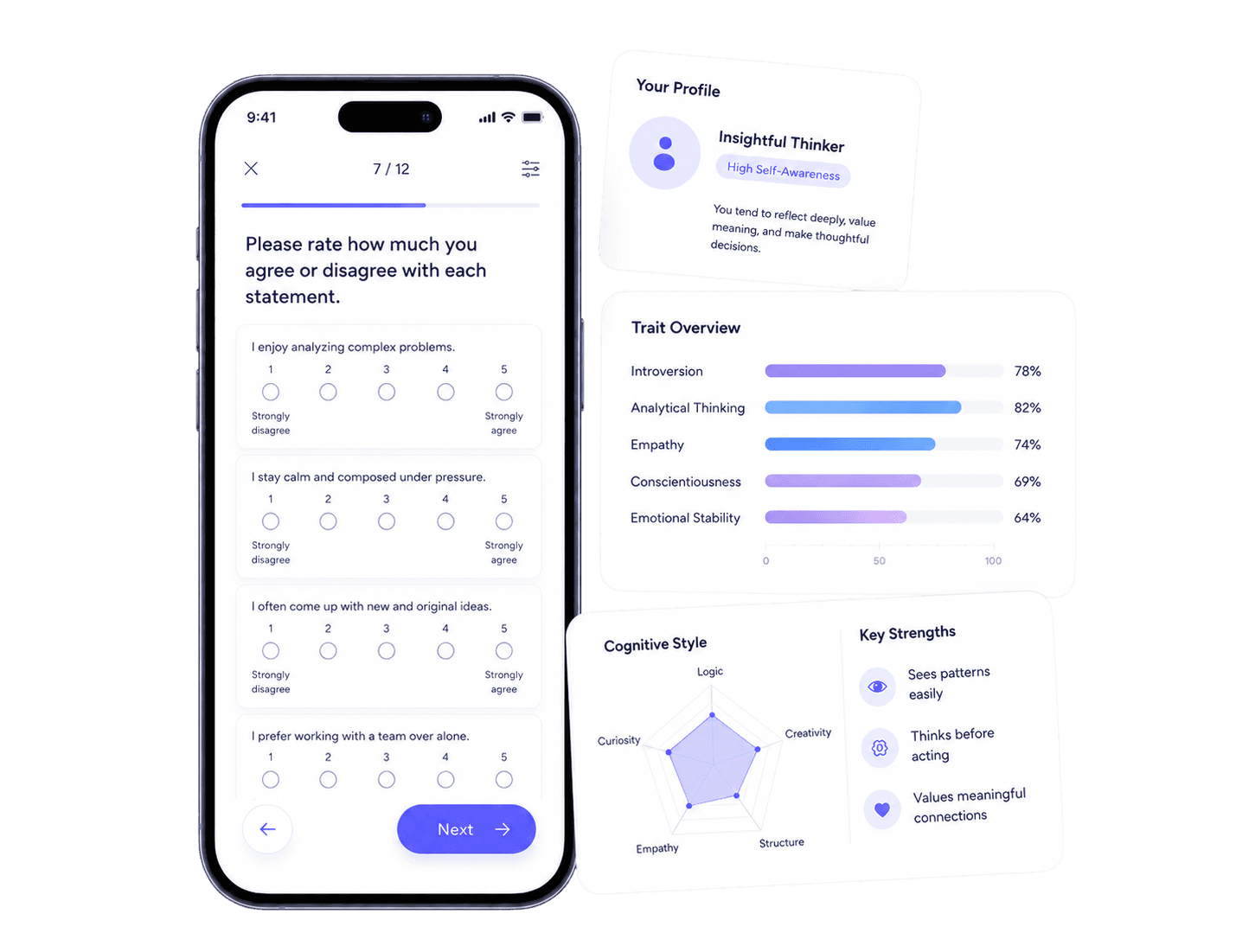
Thinkhint personality test and report preview

What the test helps you compare

One bad day versus a broader change

Compare isolated moments with experiences that have been repeating: feeling low or numb, losing interest, struggling to begin tasks, sleeping differently, withdrawing or finding it harder to imagine things improving.

What you feel versus what it changes

Mood matters, but so does impact. Look at whether concentration, routines, relationships, work or study, self-care and activities you normally value have become harder to maintain.

The pattern versus the possible cause

A questionnaire can organise what you report, but it cannot tell you whether stress, grief, physical health, medication, sleep disruption or another factor is responsible. Context still matters.

A result versus the next useful question

Use the result to decide what deserves closer attention: what changed first, what is persisting, what is affecting daily life most, and whether another person or professional should be part of the next step.

How to use the depression test thoughtfully

1

Answer from recent repeated experience

Choose responses based on what has generally been true rather than one unusually good or difficult day. Try not to diagnose yourself while you answer.

2

Read the overall pattern in your responses

Your answers are brought together into a result that helps you see whether several depression-related experiences are appearing at the same time and to what degree.

3

Compare the result with context and impact

Ask where the pattern shows up, what else was happening around it, what has changed in daily functioning and whether the result gives you something useful to discuss or investigate further.

Depression test questions

Does this depression test diagnose depression?

No. Thinkhint is an educational self-reflection tool. A diagnosis requires qualified assessment that can consider your history, health, functioning, current circumstances and other possible explanations.

What kinds of changes does the test ask me to reflect on?

The questions cover experiences such as mood, interest or enjoyment, energy, sleep, motivation, connection, self-view, hopefulness and the effort required for ordinary tasks and decisions.

Why does everyday functioning matter?

The same feeling can mean different things depending on frequency, duration and impact. Changes that begin to interfere with work, study, relationships, routines or self-care often deserve more attention than an isolated difficult day.

Can the result tell me why I feel this way?

No. Similar experiences can be influenced by stress, grief, physical health, medication, sleep problems, substance use and other mental-health conditions. The test organises your answers; it cannot determine the cause.

What should I do if the result worries me?

Consider the specific experiences that stood out and whether they are persistent or disrupting daily life. Sharing those observations with a trusted person or qualified professional can be more useful than trying to interpret the score alone.

What if I feel unsafe or have thoughts of harming myself?

Do not wait for or rely on an online test. Contact local emergency services or a crisis service now, or reach out to a trusted person who can stay with you while you get immediate help.

A useful depression test separates three questions people often mix together

The first question is what changed. Maybe your mood dropped, things stopped feeling rewarding, sleep shifted, concentration became harder or ordinary responsibilities began taking much more effort. Naming the change is different from explaining it.

The second question is how broad and persistent the change has become. An isolated rough day, a stressful week and a pattern that is affecting several parts of life are not the same situation. Frequency, duration and daily impact give the result more meaning than a single feeling does.

The third question is what might explain the pattern. An online test cannot answer that by itself. Health, stress, grief, medication, sleep, relationships and other mental-health conditions can overlap with depression-related experiences. The result is most useful when it helps you ask better questions about context rather than replacing context with a label.