Thoughts that take more space than they should
Maybe you replay, predict, second-guess, or keep looking for certainty long after more thinking stops producing a better answer.

You do not need a label before you begin. If you have noticed overthinking, tension, difficulty switching off, unease around uncertainty, or situations you keep avoiding, the test gives you a way to examine those experiences together.
Maybe you replay, predict, second-guess, or keep looking for certainty long after more thinking stops producing a better answer.
You may feel restless, tense, unable to relax, or mentally occupied even when nothing urgent is happening in front of you.
Notice whether you delay, avoid, over-prepare, check, or seek reassurance because moving ahead without certainty feels uncomfortable.
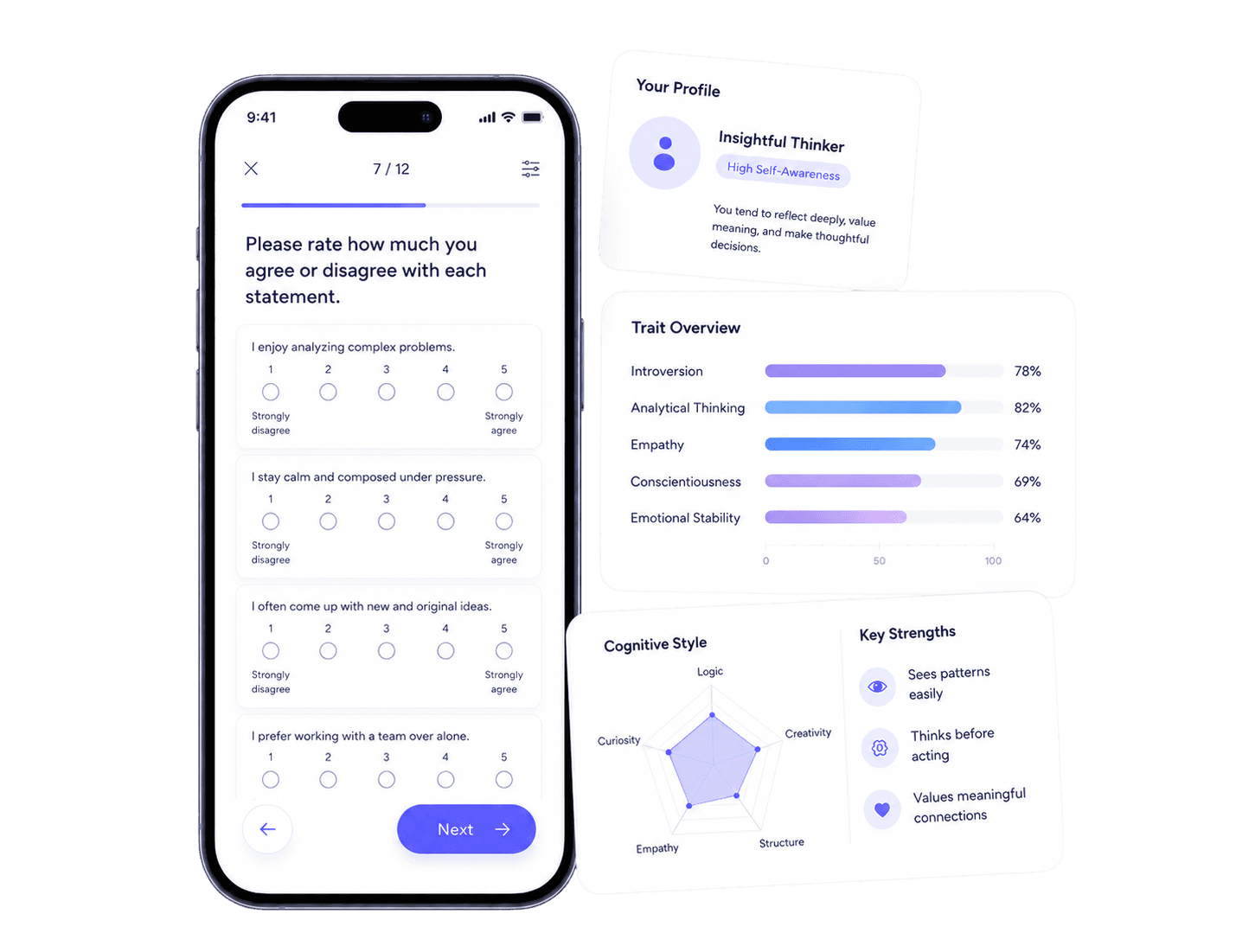
Your result brings the answers together into one anxiety-traits level and a report you can compare with your own circumstances.
Think about decisions, conversations, deadlines, waiting, changes of plan, and the moments when you want to relax but your attention keeps returning to a concern.
There is no ideal result to aim for. Choose what is usually true for you, even when your reactions differ from one situation to another.
The report can help you recognize themes and ask better questions about your experience without turning an online score into a medical conclusion.
Yes. The assessment is for self-reflection, so you do not need a diagnosis or a firm belief that anxiety explains what you are experiencing. You can start from the patterns you have noticed and see what the overall result adds.
That is expected. Anxiety-related experiences can vary by context. The result is based on the full pattern of answers rather than requiring every statement to describe you.
Thinkhint combines your answers into one overall anxiety-traits level and provides a detailed report with context around thinking, stress, relationships, communication, work, and decision-making.
No. The result is not a diagnosis and does not establish a clinical disorder. It reflects how strongly the questionnaire's anxiety-related traits appear in your answers.
That can still be useful information. An online test cannot explain every cause or context. If the experiences are persistent, distressing, or interfering with daily life, a qualified professional can help you explore them more fully.
People often postpone paying attention to anxiety because they are not sure their experience 'counts.' They may be functioning well, have good days, or be able to explain every individual worry. Then another decision gets overanalyzed, another uncertain situation becomes difficult to approach, or another quiet evening gets filled by thoughts that refuse to clock out.
A self-reflection test can be useful precisely because it asks a smaller question first: what patterns are actually present? Worry, physical tension, social unease, discomfort with uncertainty, and avoidance do not need to appear in the same way or with the same intensity for the exercise to tell you something about yourself.
The result should not be treated as a verdict. Think of it as one more piece of evidence. If it describes experiences you have been minimizing or struggling to name, you can decide whether to keep observing them, change something in your routine, talk with someone you trust, or seek professional support when the impact warrants it.