
Thinkhint

Not sure whether to try an ADHD test? Start by asking what you want it to clarify.

You may be curious because a few patterns feel familiar without being convinced ADHD is the explanation. This page helps you decide what an online self-report can usefully explore — and what it cannot settle — before you choose to start.

10–20 min
100% Private
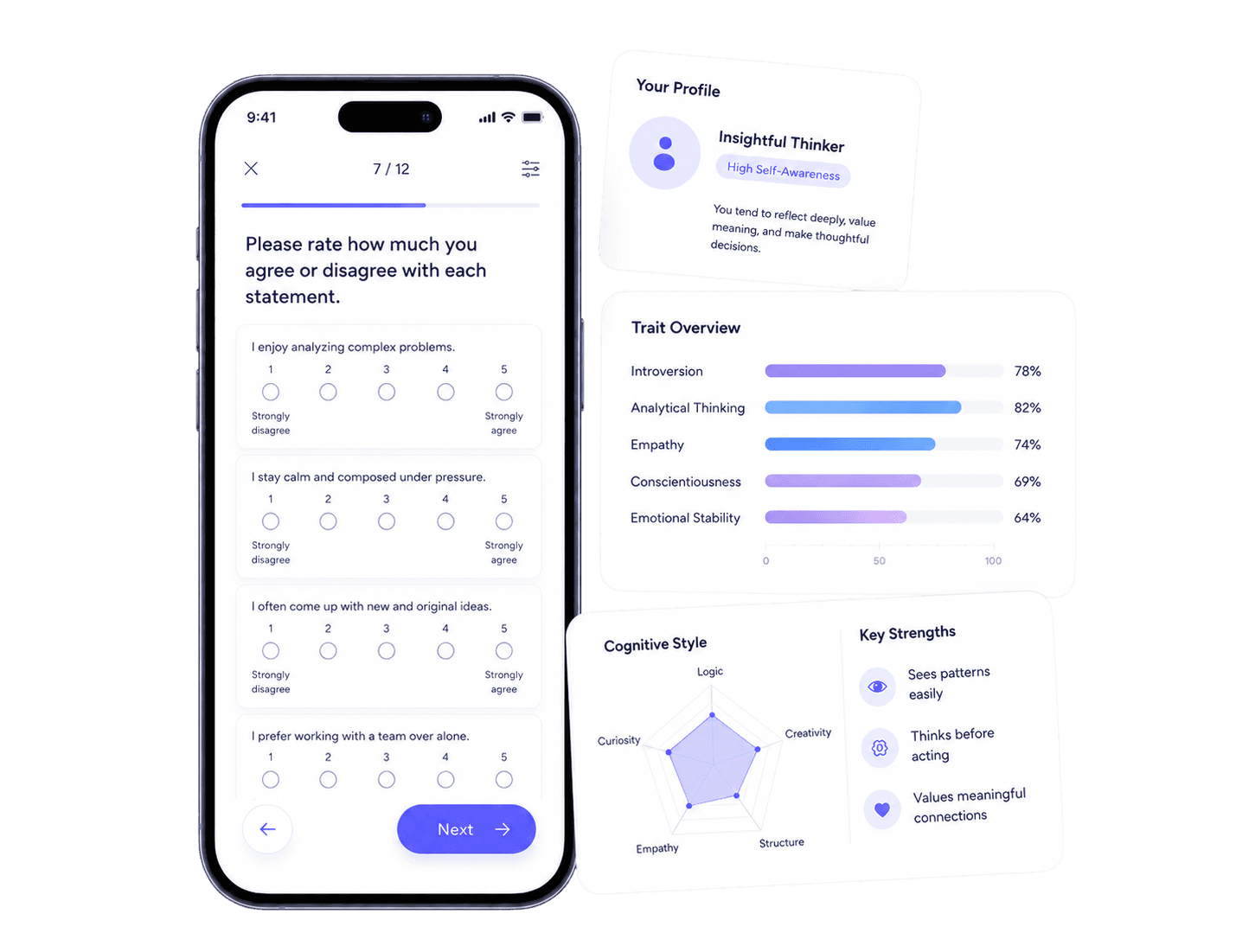
Thinkhint personality test and report preview

A test is worth trying when it can sharpen the question

You have several experiences that seem connected

Maybe distraction, delayed starts, time problems, unfinished tasks, restlessness, or quick reactions keep appearing together. A self-report can help you examine whether that impression survives a fuller set of questions.

You are unsure whether the ADHD framing really fits

That uncertainty is useful. The questionnaire includes statements you may agree with, disagree with, or find highly dependent on context. You do not need every item to support the same story.

You want better language before deciding what to do next

A result can make vague concerns more specific enough to compare with daily life, discuss with someone you trust, or bring to a professional if the difficulties are persistent and disruptive.

You understand that the test cannot identify the cause

Sleep, stress, anxiety, depression, physical health, environment, and other factors can overlap with ADHD-related difficulties. A useful self-report organizes observations; it does not prove why they happen.

Decide whether the test answers the question you have

1

Name the reason you are considering it

Is the concern mainly attention, unfinished tasks, time, organisation, restlessness, impulsive reactions, or a combination that keeps repeating? Starting with the question makes the result easier to interpret later.

2

Know what the test can return

ThinkHint produces one overall ADHD-traits level and a detailed report. It does not diagnose ADHD, identify a clinical presentation, or determine the cause of the difficulties you report.

3

Start only if that output would be useful to you

If comparing your experiences with a broader ADHD-traits pattern would help you think more clearly, take the test. If you need a diagnosis or urgent clinical guidance, an online self-report is not the right tool for that job.

What you can learn even if the result does not confirm your suspicion

A useful self-report does not have to end with “yes, that explains everything.” It can show that only some descriptions fit, that the pattern changes sharply by context, or that another question may deserve more attention than the one you started with.

That is still progress. The value is moving from a vague suspicion to observations you can compare: what repeats, what does not, what changes with structure or pressure, and what has enough impact to justify a practical change or professional conversation.

Should you try an ADHD test?

Do I need to suspect ADHD strongly before trying the test?

No. Curiosity about a recurring pattern is enough. You do not need to believe ADHD is the explanation before you answer the questions.

When is an online ADHD self-report useful?

It can be useful when you want a more systematic way to compare recurring experiences and leave with clearer language for what seems to fit or not fit your daily life.

When is this test not the right tool?

It is not the right tool for diagnosis, emergencies, medication decisions, or determining the cause of new or severe symptoms. Those questions require appropriate professional care.

What if only a few ADHD-related descriptions fit me?

That is useful information. Do not force unfamiliar statements to fit. A self-report is more informative when disagreement and mixed evidence remain visible.

Can the result explain why I struggle?

No. It can summarize ADHD-related traits in your responses, but sleep, stress, anxiety, depression, physical health, environment, and other factors can produce overlapping difficulties.

Trying a test should reduce uncertainty, not replace it with a premature label

People often reach an ADHD test after recognizing themselves in articles, videos, or other people's experiences. That recognition can be useful, but it can also make every new detail feel like confirmation if you are not careful about what does not fit.

A self-report creates value by making you answer beyond the examples that first caught your attention. Some statements will fit strongly, some weakly, and some not at all. The pattern across all of them is more informative than collecting only the evidence you expected to find.

If the result leaves you with a clearer question, the test has done something useful. If the concern is persistent and disruptive, a qualified professional can then evaluate developmental history, impairment, alternative explanations, and clinical questions that the online questionnaire cannot answer.