Use your recent baseline
Compare mood, interest, sleep, energy, concentration and motivation with what is more typical for you. The test is more useful when you answer from a real change rather than an abstract idea of normal.

This page is for the point where you have already decided to take the test. Think about your recent baseline, answer from what is typical rather than your single worst day, and let the result organize the changes you have been noticing.
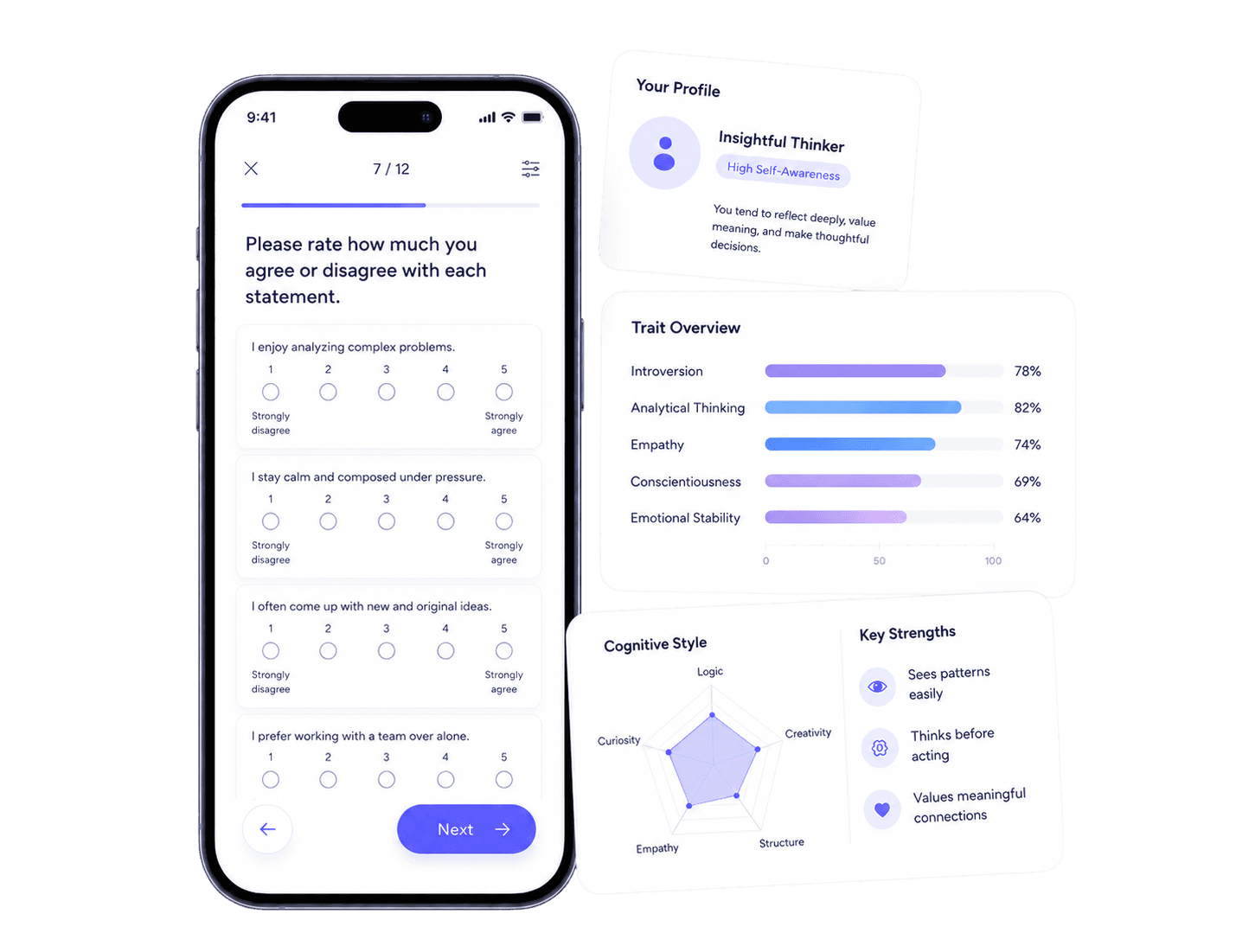
Compare mood, interest, sleep, energy, concentration and motivation with what is more typical for you. The test is more useful when you answer from a real change rather than an abstract idea of normal.
One terrible evening or one unusually good day can distort the picture. Choose the response that best matches what has generally been happening lately.
Notice what has become harder to start, finish, enjoy or manage across work, study, self-care, relationships and ordinary routine.
You do not need to decide whether you are depressed first. Respond to the experiences themselves; interpretation comes after the full set of answers is in view.
Move through the questions without trying to present the best or worst version of yourself. The goal is consistency with your recent experience.
The result brings together areas such as mood, interest, energy, sleep, concentration, self-view, connection and everyday functioning into one overall reflection.
Use the result to identify what you want to watch, discuss or understand more fully. Persistent or concerning changes may be worth taking into a professional conversation.
No. It helps to think briefly about your recent baseline and answer from what has generally been true lately rather than one isolated event.
You can take it then, but try not to let one intense moment define every answer. If possible, think across recent days and weeks so your responses reflect the broader pattern.
It asks about depression-related areas such as mood, loss of interest, sleep, energy, concentration, motivation, self-view, hopelessness, connection and everyday functioning.
No. Similar experiences can have different causes. The result organizes your answers; it does not determine whether stress, grief, health, sleep, medication or another factor explains them.
An online test is not the right next step in an immediate safety crisis. Seek urgent local help now through emergency services, a crisis service or a trusted person who can stay with you.
People often assume they need to know whether they are depressed before taking a depression test. In practice, the assessment works better when you postpone that conclusion and focus on the changes themselves: less enjoyment, less energy, more withdrawal, changed sleep, harder concentration or a more negative view of yourself and the future.
The second useful reference point is your own baseline. A person who normally sleeps six hours and suddenly sleeps ten is describing a change; another person may have a very different normal. Context makes the same answer mean something different from one person to another.
Once the result is in front of you, use it to decide what deserves attention. That may mean watching the pattern, discussing it with someone you trust or seeking a fuller professional assessment when changes are persistent, disruptive or concerning.