Before the task begins
Notice whether the difficulty starts with choosing a first step, shifting into the task, or waiting for enough interest or urgency to make starting feel possible.

A pattern becomes easier to understand when you can compare where it starts, what changes it, and what happens next. ThinkHint helps you look across recurring task starts, interruptions, urgency, routines, and attention shifts rather than treating each difficult moment as a separate event.
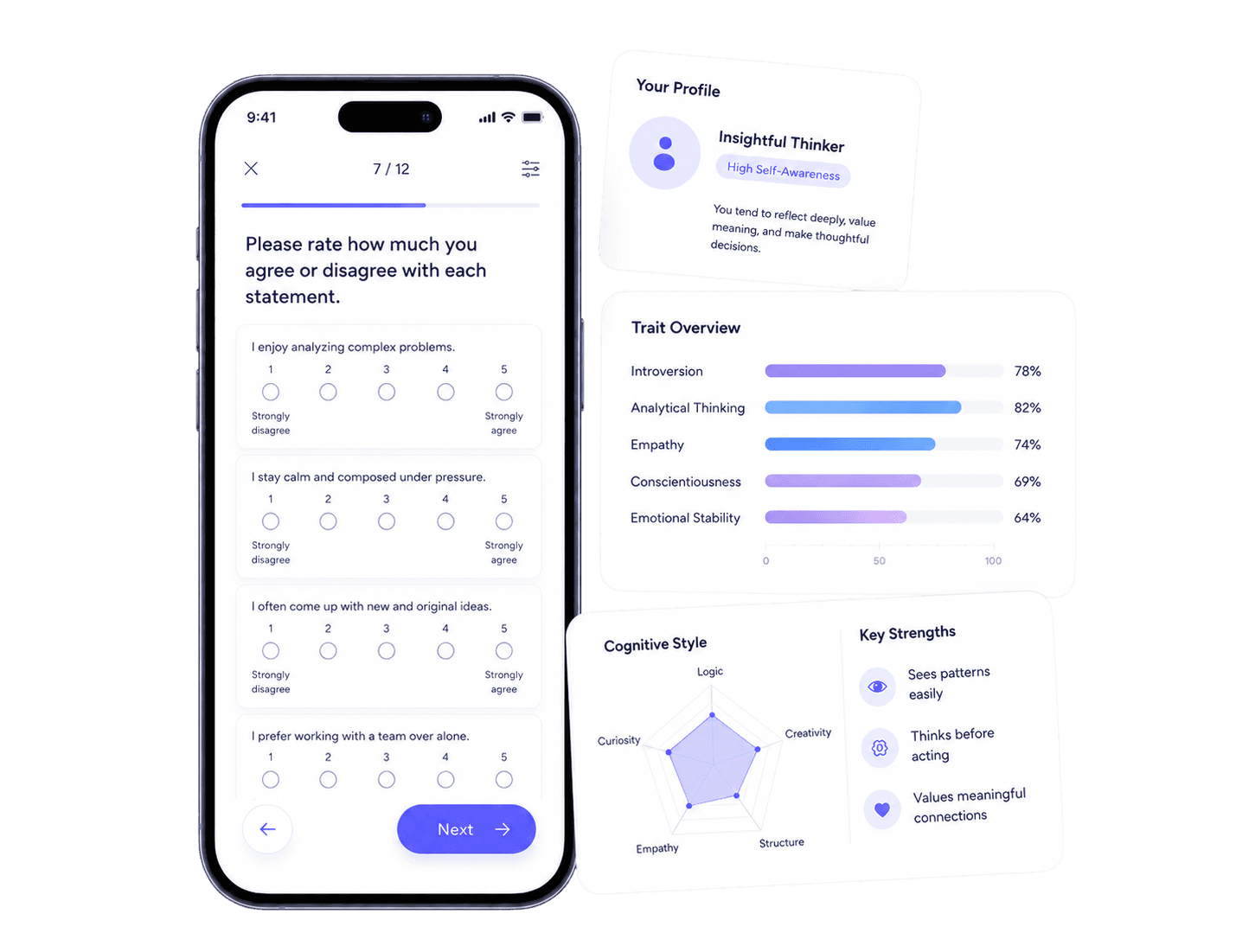
Notice whether the difficulty starts with choosing a first step, shifting into the task, or waiting for enough interest or urgency to make starting feel possible.
Compare interruptions you recover from easily with the ones that break momentum. The difference can reveal more than simply counting how often you were distracted.
A deadline can sometimes unlock action that felt unavailable earlier. Consider whether pressure improves initiation while creating new problems with rushing, details, or stress.
Look at what changes when routines are clear versus when you have to create the plan yourself. The contrast can expose patterns that stay hidden in highly structured settings.
Answer from situations you have seen repeatedly, not the single event that is easiest to remember. Frequency and repetition matter more than drama.
Think about what changes when the same kind of task goes better. Interest, structure, timing, environment, and support can make a useful contrast without explaining the cause by themselves.
Your overall ADHD-traits result gives the answers a common frame. The report can then help you decide which repeated situations are genuinely worth keeping in view.
“I procrastinate” is a broad conclusion. Comparing two real situations is more informative: one task you delayed and one you began easily, or one interruption you recovered from and one that ended the session. The contrast gives you something concrete to investigate.
Your ThinkHint result does not identify a single trigger or cause. It gives you an overall ADHD-traits level and report that can help you organize those examples. The useful next question is what stays consistent across them and what changes when the outcome is better.
One distracted afternoon or missed deadline can happen for many reasons. Repetition across time and situations gives you a more useful basis for self-reflection than one memorable event.
That is still useful context. Pressure may change attention, motivation, speed, or impulse control. Record the contrast rather than assuming the presence or absence of pressure proves one explanation.
Yes. Easier examples help show what conditions change the outcome. They can reveal the role of structure, interest, timing, environment, or support more clearly than a list of difficult moments alone.
No. The result summarizes ADHD-related traits in your responses; it does not determine the cause. Sleep, stress, anxiety, depression, health, and environment can also affect attention and follow-through.
No. ThinkHint is an educational self-report test. Diagnosis requires a qualified professional to consider developmental history, persistence, impact, multiple settings, and other possible explanations.
A repeated difficulty is easier to study when you break it into a sequence. What were you trying to do? What happened immediately before the shift? Did the problem begin with starting, staying with the task, returning after interruption, or finishing the final details? Different sequences can look similar from the outside.
The same sequence can also change with context. A task may go better when the next step is obvious, someone else is waiting for the result, or the work is new enough to hold interest. That does not prove an ADHD explanation, but it gives you a more specific observation than a global label such as lazy, disorganized, or distracted.
Use the result to keep the repeated examples and their contrasts together. If the pattern is persistent and affects important areas of life, those concrete examples are also more useful in a professional conversation than trying to prove a diagnosis from an online score.